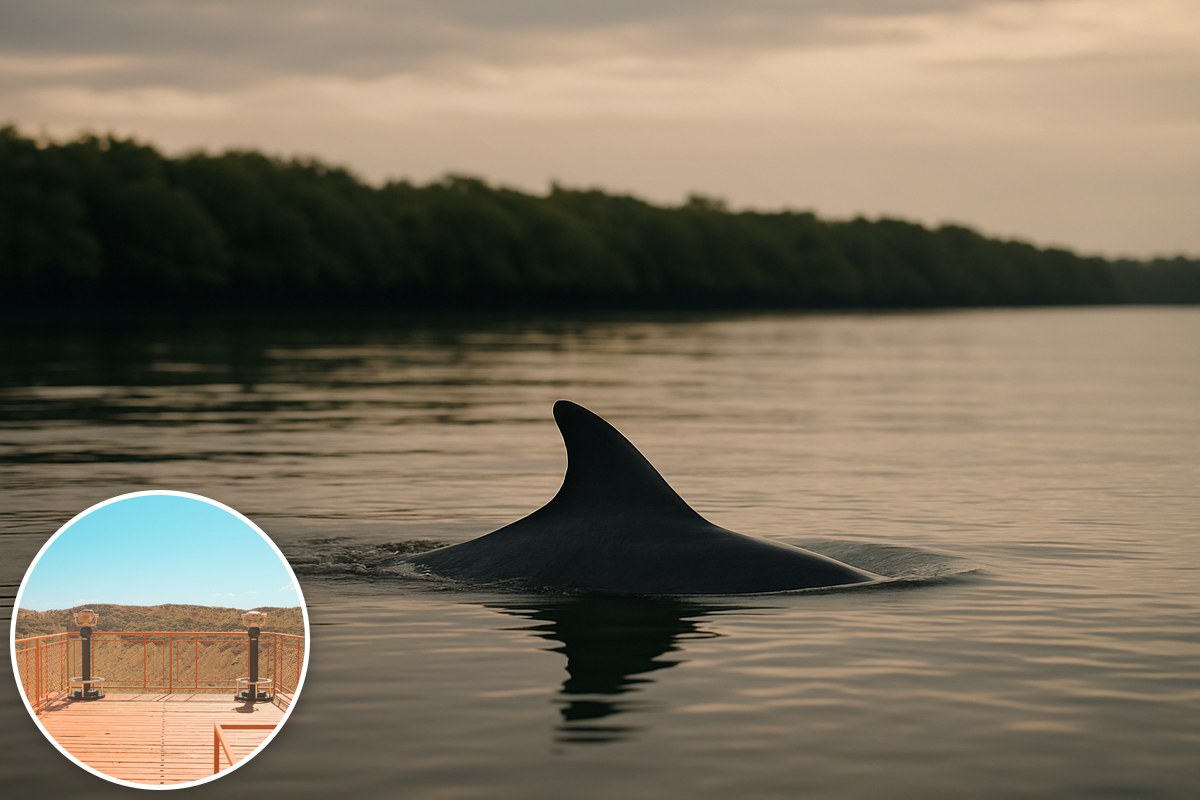
When the dolphin cruise leaves Victor Harbor early on a Saturday morning, the tourists on board share the deck with a quieter crew: citizen scientists who head out regularly to collect samples, data and observations. Their work, as ABC South East SA reports, proved invaluable to research into South Australia's harmful algal bloom — and now they are watching for something new: bird flu.
The vigilance follows Australia's first case of the virus in a dolphin, identified locally at Goolwa Beach, and a subsequent suspected case in a sea lion found near Victor Harbor — with locals still waiting to learn whether that animal died of the virus. The same reporting confirmed SA's first bird-flu case in a pelican.
Nedra Haines has been monitoring her beloved dolphins for 14 years with the Victor Harbor Dolphin Watch Group, helping compile a catalogue of 140 bottlenose and 50 common dolphins identified by the shape and markings of their dorsal fins. Everything they record feeds into the South Australian government's state biological database. It was watchers like her who — without realising it at the time — logged some of the earliest signs of the algal bloom, spotting foam behind an island in March 2025 before it blew up spectacularly on local beaches. Through the bloom's depressing months she recorded any irritation to the dolphins' thick, rubbery skins; now the checklist has changed. "If they're swimming crazy, if they're off balance. Just any neurological defects, [we] definitely keep an eye out for things like that," Ms Haines said.
On this trip, at least, there is nothing to report. The dolphins tail-slap, nose about the boat with unhurried curiosity, and carry strands of seaweed — behaviour that, apparently, can be used to attract a mate. Healthy antics, diligently logged all the same.
Alongside the dolphin watchers works Samantha Sea, from Phytoplankton of South Australia — a group formed in the bloom's early days as a response to the lack of data available to the public. She holds a degree in physics, but when the bloom appeared she started attending community-led meetings and asking what she could do to help. Since then she has pored over hundreds of water samples, teaching herself to identify algae and other phytoplankton, preparing samples for analysis at home after each trip.
It is unglamorous science — buckets, spreadsheets, long mornings on cold water — but twice now it has put Fleurieu Peninsula volunteers at the front line of South Australia's marine health: first when the water turned, and now as the state waits on a sea lion's test results to learn how far the virus has reached.